
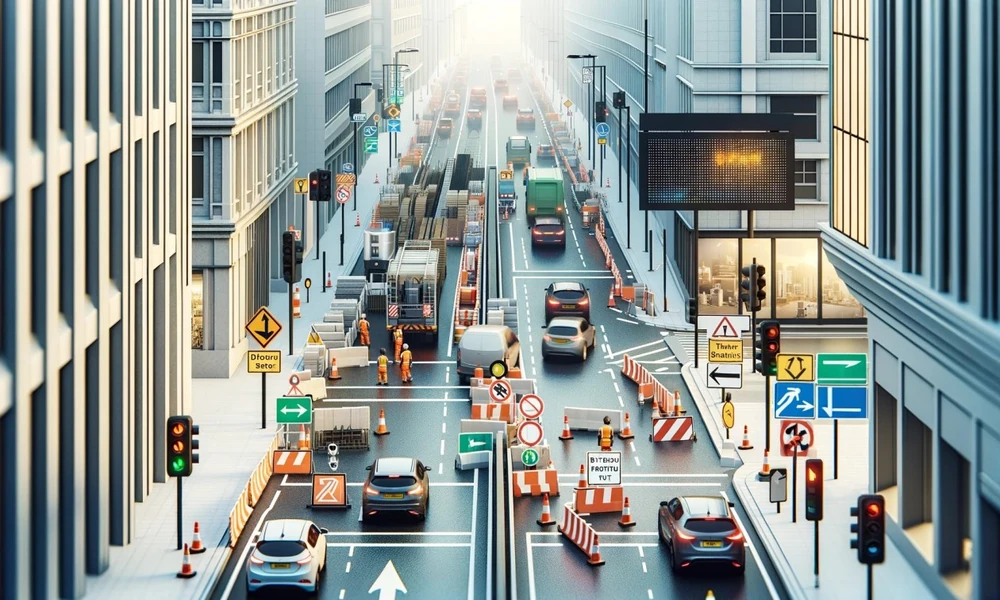
Picture a construction crew on a darkened, high-speed highway at 2 a.m., flanked by the roar of vehicles hurtling past just meters away. Each moment is a careful choreography of safety, timing, and communication. Coordinating freeway closures along busy corridors is never a simple shutdown; it is a high-stakes operation where one misstep can ripple out for kilometers in traffic delays or, worse, endanger lives.
The Origins of Freeway Closures on Busy Corridors
Traffic control on high-speed roads has always demanded more than simply putting out cones. Early efforts saw workers relying on little more than flagging and minimal signage, exposing them directly to unpredictable traffic. With rising traffic volumes through the latter half of the 20th century, the need for structured protocols became unavoidable.
When construction and maintenance moved onto major corridors like Ontario’s 400-series highways, initial responses were often reactive, responding to dangers after the fact. Early safety standards, while a step forward, often lagged behind the real-world risks workers faced each night.
Developing Safety Standards: The Role of Ontario Traffic Manual Book 7
Out of necessity, Ontario developed the Traffic Manual Book 7, an evolving standard that codified safe practices for temporary road conditions. For high-speed freeways, Book 7 calls for longer tapers, extended buffer zones, and advance warning signs positioned far before a work zone. One of its most significant requirements is the use of truck mounted attenuators (TMAs), crash cushions designed to absorb the impact of a vehicle that breaches the closure.
TMAs, especially those adhering to the rigorous MASH standard, have become the backbone of modern freeway work zone safety. Not only do they shield workers, but they also provide predictable, controlled responses if they are struck. Alongside these advances, buffer and taper dimensions have been recalibrated for highway speeds, and advance warning systems now start at impressive distances to alert oncoming drivers.
Coordination Complexities in High-Speed Freeway Closures
Yet even with these standards, the logistical and operational hurdles remain immense. Scheduling is a delicate puzzle; lanes on busy corridors can rarely be closed during the day, pushing most activities to night or off-peak windows. Crews have to mobilize quickly and be ready to open the roadway again before the morning surge begins.
The patchwork of agencies, provincial, municipal, and sometimes private operators, adds layers of complexity. Each body may require its own permits, plans, and reporting, and closures often demand real-time coordination between contractors, utilities, and government. Even minor miscommunication can derail a meticulously planned closure.
Technological and Operational Advances in Traffic Control
Not all closures are static. Rolling or mobile operations now allow work to progress along a corridor, accompanied by shadow vehicles and TMAs that move with the crew. Arrow boards, portable message signs, and advanced digital warning systems give drivers critical information far in advance, adapting to traffic conditions in real time.
Perhaps most crucially, 24/7 emergency response capability has become the norm. When weather, accidents, or other incidents force sudden changes, crews must be able to adapt instantly, sometimes in the dead of night and in dangerous conditions.
Crew Training and Certification: Ensuring Expertise on the Frontline
Life at 100 km/h offers zero margin for error. Crews receive specialized training not only in setup and teardown, but also in working under low-visibility and night conditions. Certification, regular compliance inspections, and supervisor sign-offs ensure every closure meets the strict requirements of Book 7.
Training is not a one-and-done affair. Standards evolve, new equipment is introduced, and each crew member must remain fluent in current best practices, particularly when stakes are highest, during overnight closures or emergency responses.
Logistical Challenges of Equipment and Resource Mobilization
Behind every safe closure is a flurry of staging and dispatch. Centralized yards, like those in Concord for Ontario’s 400-series network, are stocked with TMAs, crash trucks, arrow boards, and every possible sign or cone. Balancing this equipment against fluctuating project demand is its own science. With closures happening province-wide and often on tight notice, rapid mobilization is essential.
Each piece, from TMAs to support vehicles, must not only be available, but also inspected, positioned, and operated according to the job’s unique demands.
Future Trends and Innovations in Freeway Closure Coordination
Looking ahead, traffic control plans are becoming more sophisticated, integrating automated and digital systems for faster deployment and monitoring. The trend toward more night and weekend operations is likely to continue, given rising daytime traffic congestion. Anticipating changes in regulations and technology, whether it is smarter warning devices or AI-powered traffic flow modeling, will keep the industry in constant motion.
Best Practices for Seamless Freeway Closure Execution
Success begins long before barricades go up. Early and thorough planning, including detailed traffic control plans and permit preparation, lays the foundation. Communication, between contractors, road authorities, emergency services, and even the public, is pivotal to preventing confusion and minimizing delays. During the closure, continuous monitoring, swift response to issues, and meticulous documentation ensure not just compliance, but safety and accountability.
Experts suggest that services like Salus freeway traffic control provide both the certified crews and the specialized equipment required to meet Ontario’s demanding standards, serving as a critical resource for contractors and public agencies alike.
In the end, the challenges of coordinating freeway closures along busy corridors are as much about adaptability and expertise as they are about following rules. When the traffic flows smoothly and crews return home safely, it is the result of thousands of moving parts coming together perfectly, often in the unseen hours before the city wakes.